Marin Mountain School
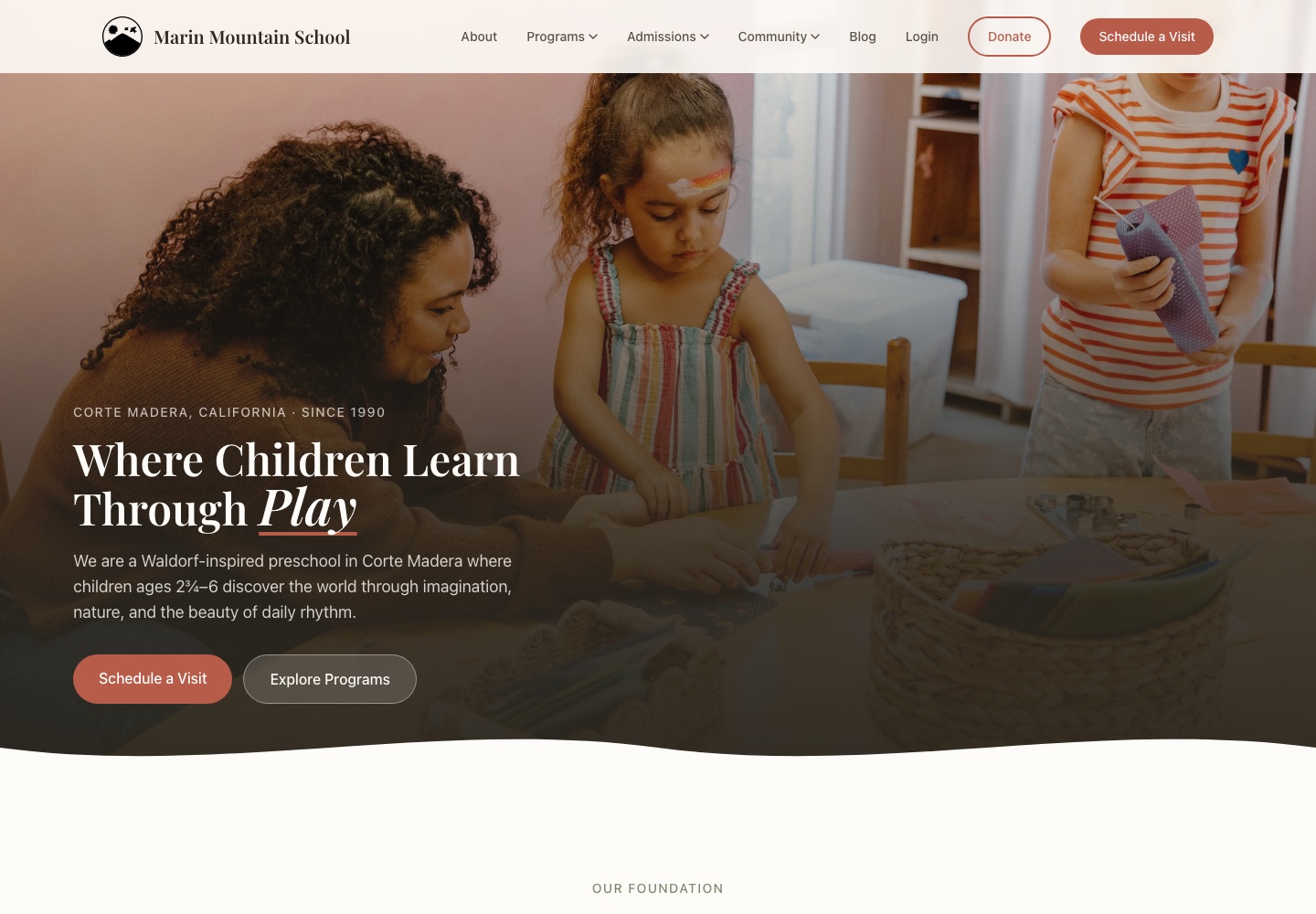
A 35-year-old preschool in Corte Madera wanted a rebuild. The design was dated and the site looked it.
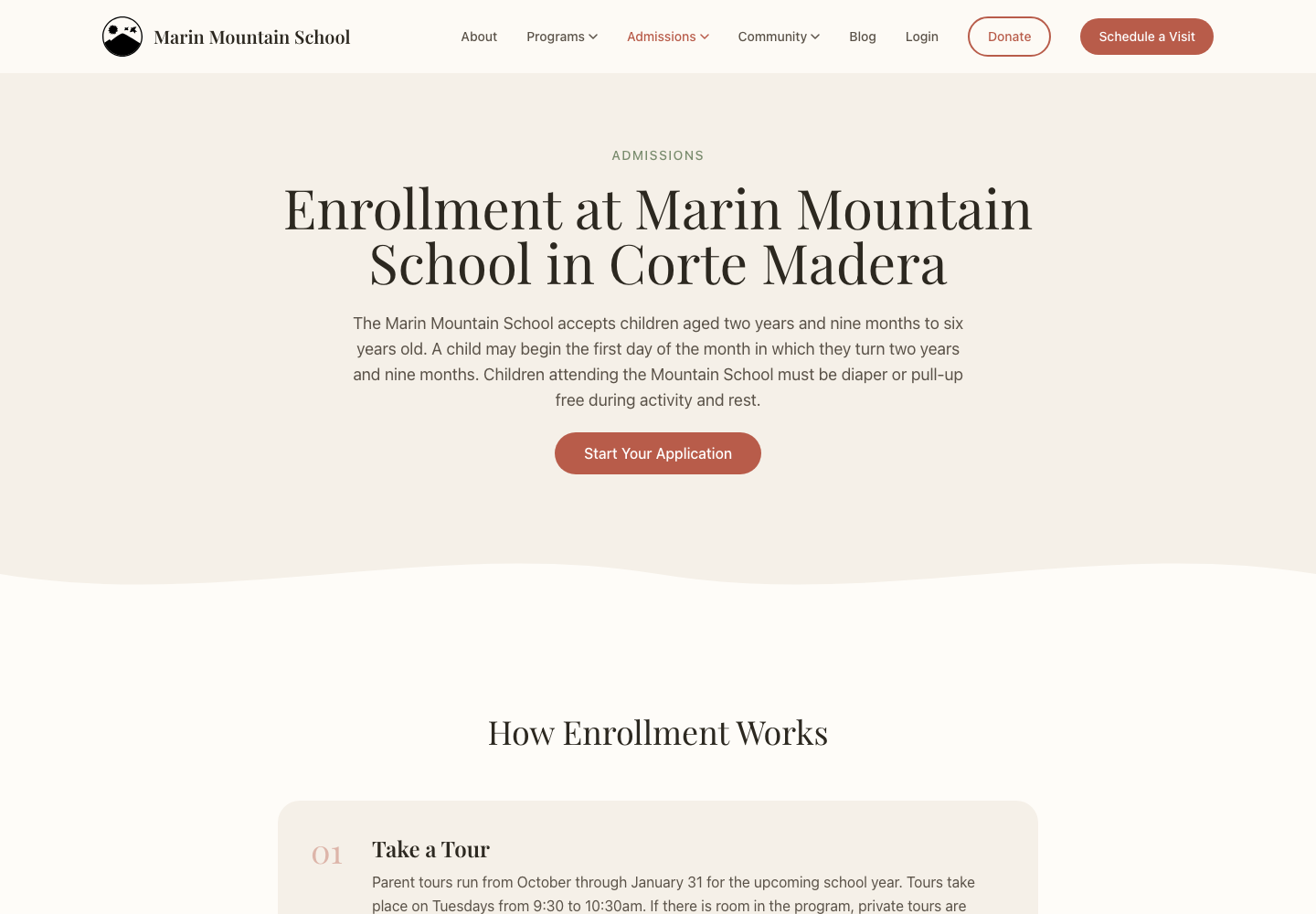
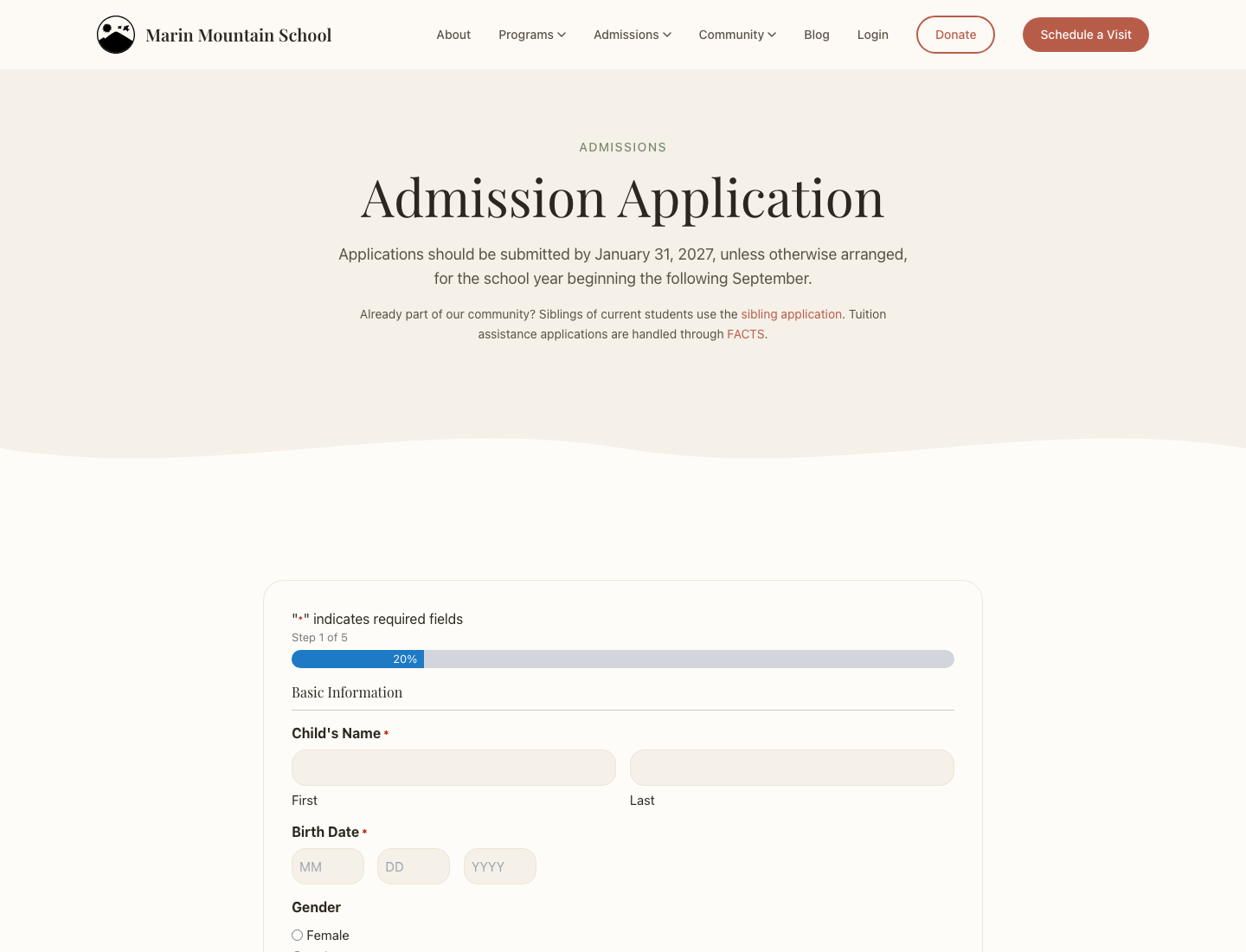
The rebuild was most of the way done as a custom Next.js site before the real constraint surfaced. The school does not just publish pages. It takes money and runs admissions through that site. Nine Gravity Forms, live Stripe, a 65-field admission application with a fee attached, a named scholarship fund, and nine years of submitted entries behind them. At the point the new site was ready to launch, 292 applications and 372 contact messages were already in that system.
So the actual problem was not design. A beautiful new site on a different stack would have orphaned a working payment pipeline during admissions season, and the director who runs it is not technical and had no appetite for learning a second system.
I abandoned the Next.js deployment and ported the design into their existing WordPress instead. Forms, payments and entry history stayed exactly where they were, it cost the school nothing new, and it removed a hosting bill rather than adding one.
The audit that changed the plan
I crawled all 24 pages of the live site and mapped every form to the page embedding it, which is what produced the finding the project turned on. The new-family application lived on a noindexed page nobody had mentioned. Tuition ran through FACTS Management rather than the parent portal everyone assumed. Two of the nine forms were embedded nowhere at all.
It also corrected the site's own copy. The donate page claimed gifts were processed through the parent portal. They were not. They ran through Gravity Forms and Stripe.
Launching without downtime
The theme was uploaded inactive, so it sat on the server changing nothing while the director reviewed it through WordPress Live Preview, which renders the new design for one logged-in session while every visitor still sees the old site.
The flip was activating the theme. Ten seconds, no database change, no downtime, and rollback was activating the old theme again. The one thing I refused to use was SiteGround's push-to-live, which overwrites the live database and would have destroyed any application submitted during the build window.
Old pages I never designed still render, because the default template carries the full design language. Nothing 404s and nothing looks half-finished.
Making it editable by a non-technical director
The school's director does everything and is not comfortable with WordPress. The point of the ACF layer was to make her independent of me.
Every photo and every piece of global copy is exposed through ACF Pro as Local JSON, so field definitions live in git rather than trapped in a database. Templates read those fields with the current content hardcoded as a fallback, so the theme renders complete the moment it is activated and editing is optional instead of a prerequisite.
She gets a custom Welcome dashboard with large labeled cards for the tasks she actually does, and a How-To Guides page beside it with plain-language walkthroughs that print, because she prefers paper. Menus she does not need are hidden from non-admin roles, and Editors can read form entries without being able to touch plugins, payments or the design.
Copy under a trademark constraint
After launch the school was told by its accrediting association that the site could not use a specific pedagogical term in the domain, name, tagline, headers or links, and that the copy had to describe what the school does rather than what that tradition does.
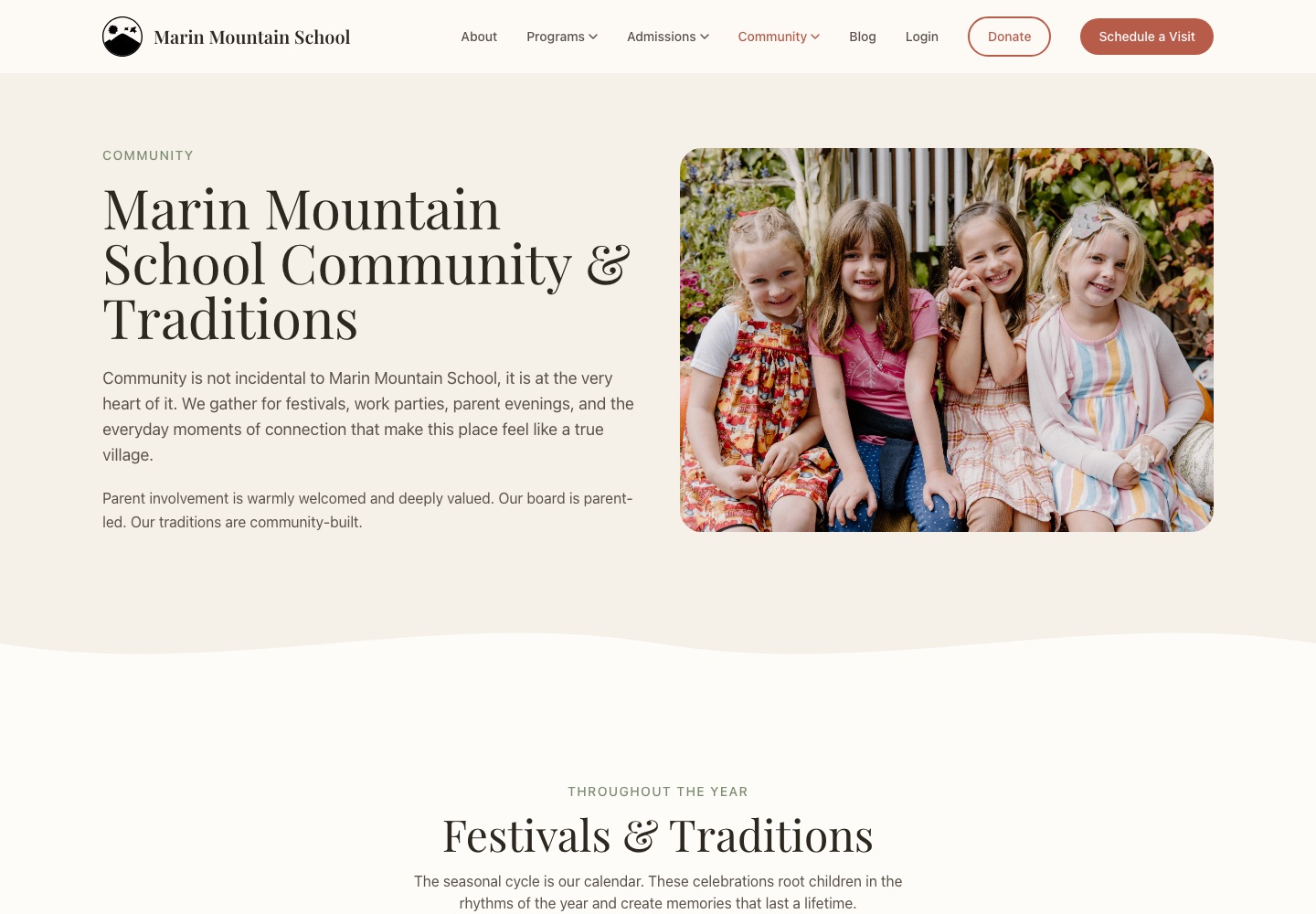
I rewrote the site to that rule. The headline changed, the FAQ was restructured so the school is the grammatical subject of every question and answer, page titles and schema descriptions were rewritten, eight alt texts were fixed and the share card was regenerated. Then I verified compliance against the live site rather than assuming it: zero occurrences in any page title, any h1 or h2, or any alt text across all 11 pages.
The positioning survived. The term still appears where the rules allow it, in full sentences on three pages and in teachers' factual training credentials.