Radical Health, D2C Patient Acquisition
A growth take-home for Radical Health, an AI oncology platform that returns a complete report of a patient's treatment options in 24 hours. The brief: pick one segment and moment, write the ads and the landing page for real, and plan $50K across Google and Meta.
I picked the treatment-decision window. A plan has been proposed, a start date exists, and in the two to four weeks between them one question sits in the room without a good way to answer it. Is this everything, or is this the first thing? That window is the only moment where a 24 hour report changes anything, which is the entire argument for it over any other segment.
The wedge is completeness, not correctness. Correctness framing asks whether the plan is right, which puts the product against the oncologist and crosses a compliance line the team cannot cross. Completeness asks whether the full option set is visible. It never grades the plan, and it is already their own headline.
Spec work. It was never run, so there is no performance data here. Everything below is the deliverable and the reasoning.
One moment, two people
Two people occupy that window, and the channel decides which one you reach. On Google the query does the targeting, so whoever types stage 2 lung cancer treatment options has told you everything.
On Meta you cannot target a health condition at all. Detailed targeting for health was removed in 2022, and policy forbids an ad implying it knows the viewer's health status. So the creative does the qualifying, and the only person an ad can legally address is the caregiver. Roughly 43 percent of health information seekers are researching for someone else, and they are the ones who go online first. The constraint and the best strategy point the same direction.
Five ads, built in their system
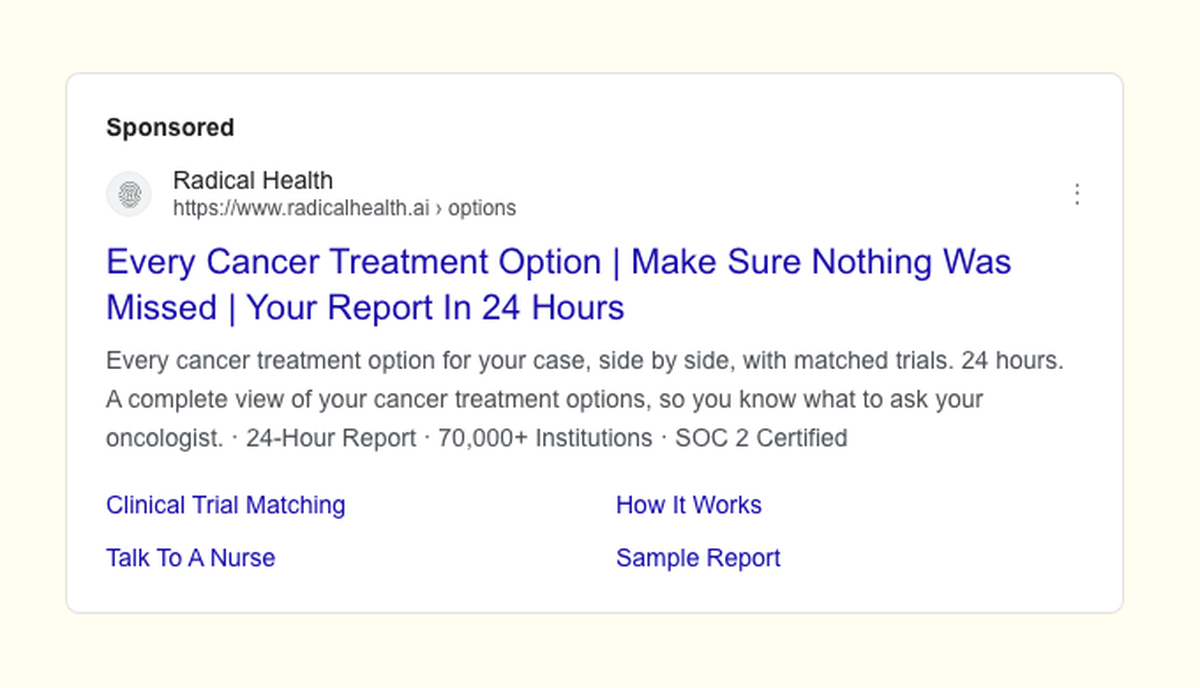
Two Google responsive search ads and three Meta concepts, all written to run as is.
The Meta creatives are built on Radical's own assets rather than invented ones: the still from their hero film behind the caregiver headline, a real patient's portrait cropped the way their site crops it, and the three option cards lifted straight out of the actual report. Their licensed display face is self-hosted so the type is theirs, and their headline underline device is reused exactly.
What is not in any of them: no countdown, no urgency device of any kind. The urgency is already in the room. Manufacturing more of it is the fastest way to lose this audience permanently. Calm is the differentiated position in a feed full of people shouting at sick people.
A paid landing page, not a homepage
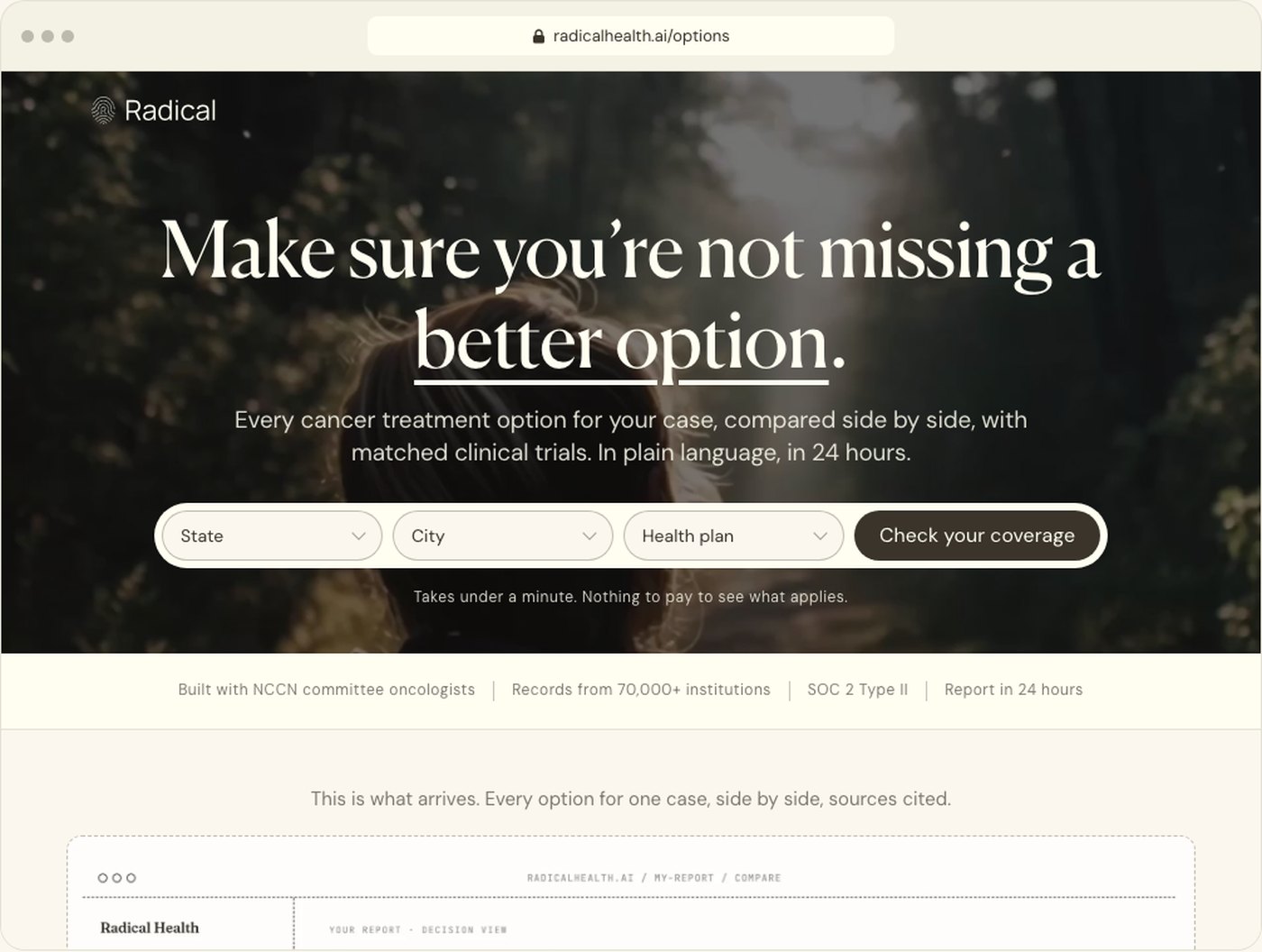
The landing page is deliberately not their homepage. Logo only, no navigation, one CTA repeated once, seven blocks, message-matched to the ad that drove the click. It uses the real report screenshot as the proof rather than describing it.
The sequencing is built around where the funnel actually leaks. The first conversion is a three-field coverage check, which is easy. The real drop is at records connection, the moment a stranger on the internet asks for access to your medical file. So the page names the records step before the click, names the 70,000 institution network to turn an act of trust into an act of logistics, and puts the NCCN advisors and the nurse above the form, because the question people are really asking is not is this secure, it is is this real.
The metric and the two-week plan
The number on the wall is cost per records-connected patient, not cost per coverage check. A check with no records behind it produces a generic report and a dead relationship, and counting it makes a channel look good while it wastes money.
Week one changes nothing except negative keywords. The instinct to optimise on day three is the most expensive instinct in paid acquisition at this budget. End of week two the kill, scale and pause thresholds are already written down and agreed, including killing any ad whose coverage checks connect records under 40 percent even if its cost per check is the best in the account, because it is buying the wrong person.
One honest note carried on the page: price sits behind the coverage check, so contribution margin and a true allowable CAC could not be modelled from outside. Every threshold is a starting hypothesis to be replaced by week one data.